Barnacle Gold Rush: Divers Earning $8K Per Job Cleaning Ships Near Strait of Hormuz
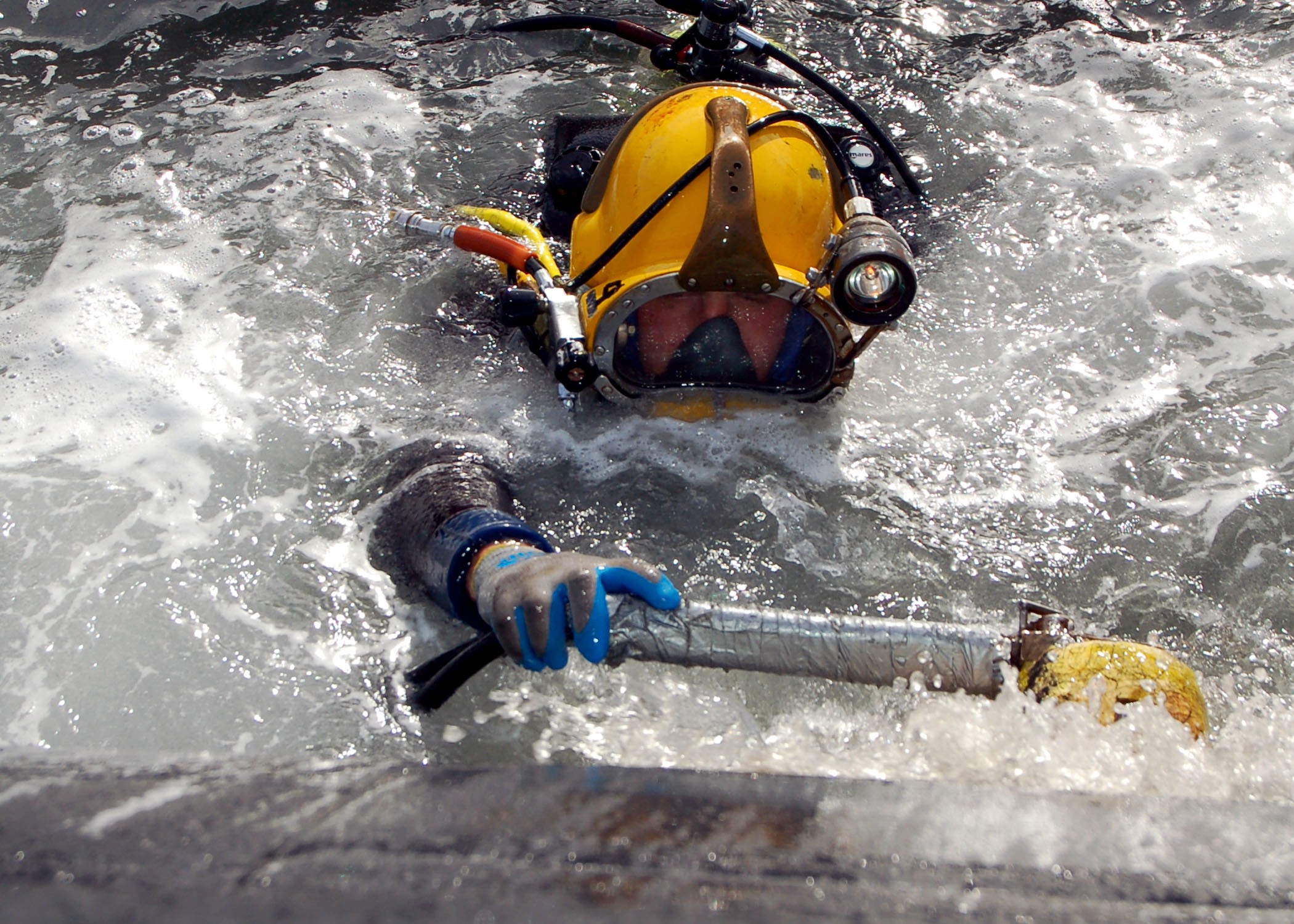
A U.S. Navy diver uses a scrubber to clean the hull of the Los Angeles-class fast attack submarine USS Key West (SSN 722). U.S. Navy photo by Chief Journalist David Rush. Public domain.
Demand for underwater hull cleaners has skyrocketed 30-fold as over 500 ships await barnacle removal near the Strait of Hormuz following the US-Iran peace agreement. Diving teams now charge up to $8,000 per job.
When the US and Iran agreed to begin negotiating a lasting peace deal—starting with the re-opening of the Strait of Hormuz—the diving world got an unexpected windfall. Not from tourism, but from barnacles.
A 30-Fold Surge in Demand
Demand for commercial divers who specialize in removing barnacles and algae from ship hulls has soared 30-fold in recent days, according to one ship surveyor who spoke to Bloomberg. The reason? Over 500 ships are currently anchored near the Strait of Hormuz, according to ship tracking firm Kpler.
These vessels spent weeks—some months—stranded in the warm, shallow waters of the Persian Gulf while the strait remained closed. That's the perfect recipe for biofouling: the rapid accumulation of marine organisms on submerged surfaces.
$8,000 Per Scrape
Before the peace agreement, hull cleaning jobs in the region commanded around $5,000. Now, with demand far outstripping supply, diving teams are charging up to $8,000 per job—a 60% premium.
For context, that's more than many dive instructors make in an entire month of teaching Open Water courses at a tropical resort. For commercial divers with the right certifications and willingness to work in the Gulf's challenging conditions, this represents a significant earning opportunity.
What Is Biofouling—and Why Does It Matter?
Biofouling is the technical term for what happens when marine organisms—barnacles, algae, mollusks, and other sea life—attach themselves to ship hulls. It's not just an aesthetic problem:
- Speed Reduction: A heavily fouled hull can reduce a vessel's speed by up to 10%
- Fuel Penalty: The increased drag forces engines to work harder, hiking fuel consumption by as much as 40%
- Port Rejection: Many international ports refuse entry to vessels with visible biofouling, fearing the introduction of invasive species
The International Maritime Organization (IMO) has strict biofouling management guidelines, and port state authorities in Australia, New Zealand, and California are particularly aggressive about enforcement.
The Diving Work
Underwater hull cleaning is grueling commercial diving work. Divers use specialized hydraulic scrapers and brushes, often working in low-visibility conditions, against the clock. A typical cleaning job on a medium-sized cargo vessel can take a team of 3-4 divers several hours to complete.
The Persian Gulf presents additional challenges: water temperatures can exceed 30°C (86°F) at depth during summer, and the high salinity accelerates equipment corrosion. Divers must be certified in surface-supplied diving or commercial scuba, and many companies require HAZMAT and confined-space qualifications.
A Temporary Boom?
The barnacle-cleaning gold rush is likely temporary—once the stranded fleet is cleared and normal shipping resumes, demand should stabilize. But for now, if you're a certified commercial diver looking for high-paying work, the Persian Gulf is calling.
"A summer gig for your scuba-licensed unemployed friend just dropped: underwater barnacle cleaner in the Persian Gulf," notes Morning Brew, who first reported the trend.
Source: Bloomberg, Morning Brew, Kpler
Image: Getty / Paramount Pictures
Written by GeckoDive Team
The official GeckoDive team sharing diving knowledge, gear reviews, and destination guides.