1,121 New Marine Species Discovered in a Single Year: The Ocean Census 2026
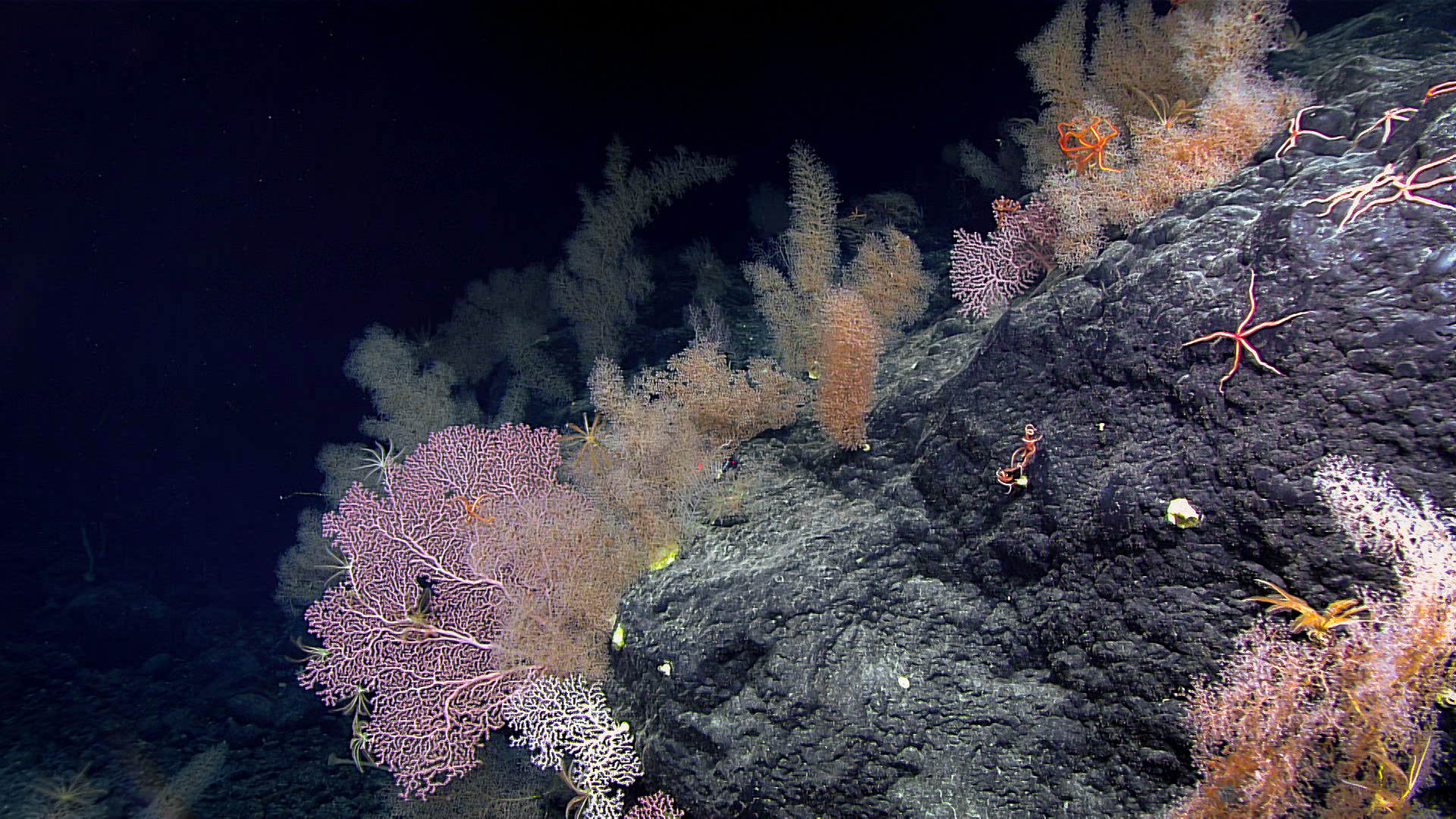
A garden of deep-sea corals at Sibelius Seamount, photographed at 2,465 metres depth. NOAA Office of Ocean Exploration and Research, Deep-Sea Symphony expedition. Public domain.
From a deep-sea 'ghost shark' that predates the dinosaurs to a worm living inside a glass sponge — scientists have identified 1,121 previously unknown marine species in just one year, smashing the previous discovery rate by 54%.
The ocean is the largest habitat on Earth, yet up to 90% of its species remain undiscovered. This year, a global team of scientists took a massive swing at closing that gap — and the results are staggering.
The Nippon Foundation-Nekton Ocean Census, the world's largest mission to accelerate ocean species discovery, has announced the identification of 1,121 previously unknown marine species in a single year. That's a 54% jump in the annual rate of species discovery, pulling creatures from depths of up to 6,575 metres out of scientific limbo and into the record books.
A Race Against Time
For decades, the bottleneck in marine biology wasn't finding new species — it was naming them. On average, it takes 13.5 years from the moment a specimen is collected to the day it's formally described in scientific literature. Many species go extinct before they're ever catalogued.
Dr. Michelle Taylor, Head of Science at Ocean Census, put it bluntly: "With many species at risk of disappearing before they are even documented, we are in a race against time to understand and protect ocean life. For too long, thousands of species have remained in a scientific 'limbo' because the pace of discovery couldn't keep up. We are now breaking that bottleneck."
The Stars of the Show
Among the 1,121 new species, a few stand out as particularly remarkable:
-
The 'Ghost Shark' Chimaera (Chimaera sp. 1): Discovered in Australia's Coral Sea Marine Park at depths of 802–838 metres, this distant relative of sharks and rays belongs to a lineage that split off nearly 400 million years ago — predating the dinosaurs. Ghost sharks are among the most enigmatic inhabitants of the deep ocean, and this new species adds another chapter to their ancient story.
-
The Glass-Castle Worm: Found on a volcanic seamount off Japan, this symbiotic bristle worm lives inside a glass sponge — a "glass castle" of crystalline silica. It's the kind of relationship that sounds like science fiction but is very real beneath the waves.
-
Corals, Crabs, and Anemones: Beyond the headliners, the census catalogued new species of deep-sea corals, shrimps, crabs, sea urchins, and burrowing anemones — each one a piece of the vast, interconnected puzzle of ocean life.
How They Did It
The Ocean Census deployed an unprecedented combination of expedition-scale fieldwork and cutting-edge technology. Over the course of the year, the programme conducted 13 expeditions across some of the world's most remote and least-explored ocean regions, in partnership with JAMSTEC (Japan), CSIRO (Australia), and the Schmidt Ocean Institute. These were complemented by 9 species discovery workshops bringing together leading taxonomists from around the globe.
To solve the naming bottleneck, the project built NOVA, an open-access database that posts discovery data within weeks — a radical acceleration from the traditional 13-year timeline.
Why It Matters for Divers
For the diving community, discoveries like these are more than academic milestones. Every new species deepens our understanding of the ecosystems we visit. The coral gardens of the deep sea, the ghost sharks of the Coral Sea, the symbiotic worms of volcanic seamounts — these aren't just scientific curiosities. They're part of the same ocean we explore, and their survival is tied to the health of the reefs, walls, and wrecks we dive every day.
Director Oliver Steeds of Ocean Census captured the perspective well: "We spend billions searching for life on Mars or going to the dark side of the moon. Discovering the majority of life on our own planet — in our own ocean — costs a fraction of that."
What's Next
The Ocean Census has set an ambitious target: 100,000 new species catalogued over the coming years. With 1,121 down and the pace accelerating, the mission is just getting started. For divers, marine enthusiasts, and anyone who cares about the blue planet, there's never been a more exciting time to pay attention to what lies beneath.
Featured image: A garden of deep-sea corals at Sibelius Seamount, photographed at 2,465 metres depth during NOAA's Deep-Sea Symphony expedition. Public domain.
Written by GeckoDive Team
The official GeckoDive team sharing diving knowledge, gear reviews, and destination guides.